20 May, 26

Types of Hydraulic Presses and How They Work

Types of Hydraulic Presses and How They Work

In many workshops and factories, some jobs need a strong force but also a lot of control. That’s where a Hydraulic Press is used. It’s one of those machines that turns tough, tiring work into something much easier to handle. Instead of depending on manual effort, a Hydraulic Press Machine uses fluid power to press, shape, or form materials in a smooth and steady way. You’ll find it working in metal shops, manufacturing units, and even large industrial plants where accuracy matters just as much as strength. What makes it interesting is how simple the idea is: a small force in, a big force out. Different types of presses are used depending on the type of work, from light workshop work to heavy industrial tasks. Understanding how they work and where each type fits can really help in choosing the right machine for the right work.

How a Hydraulic Press Works 

The working of a Hydraulic Press is easier than it sounds. It is based on using liquid to multiply force. It works in the following ways:

  • A small push is applied to the hydraulic oil
  • The oil moves through a closed system
  • This creates pressure inside the machine
  • The pressure moves a larger piston
  • That piston produces a strong force for lifting or pressing

That piston produces a strong force for lifting or pressing. A Hydraulic Press Machine simply uses this process to make heavy work easier without needing physical strength from workers.

Different Types of Hydraulic Press

Here are the different types of hydraulic presses used in various industries:

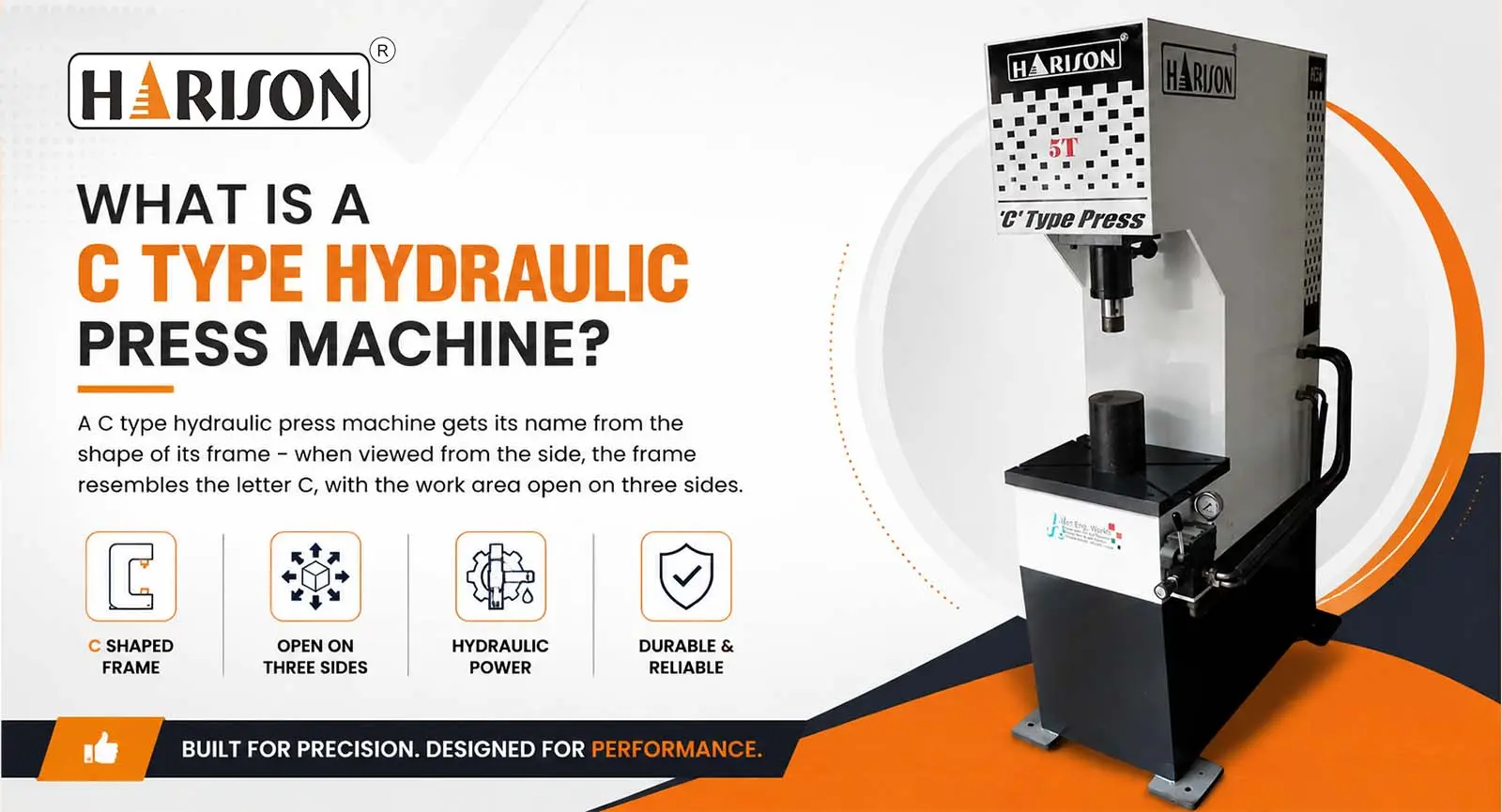
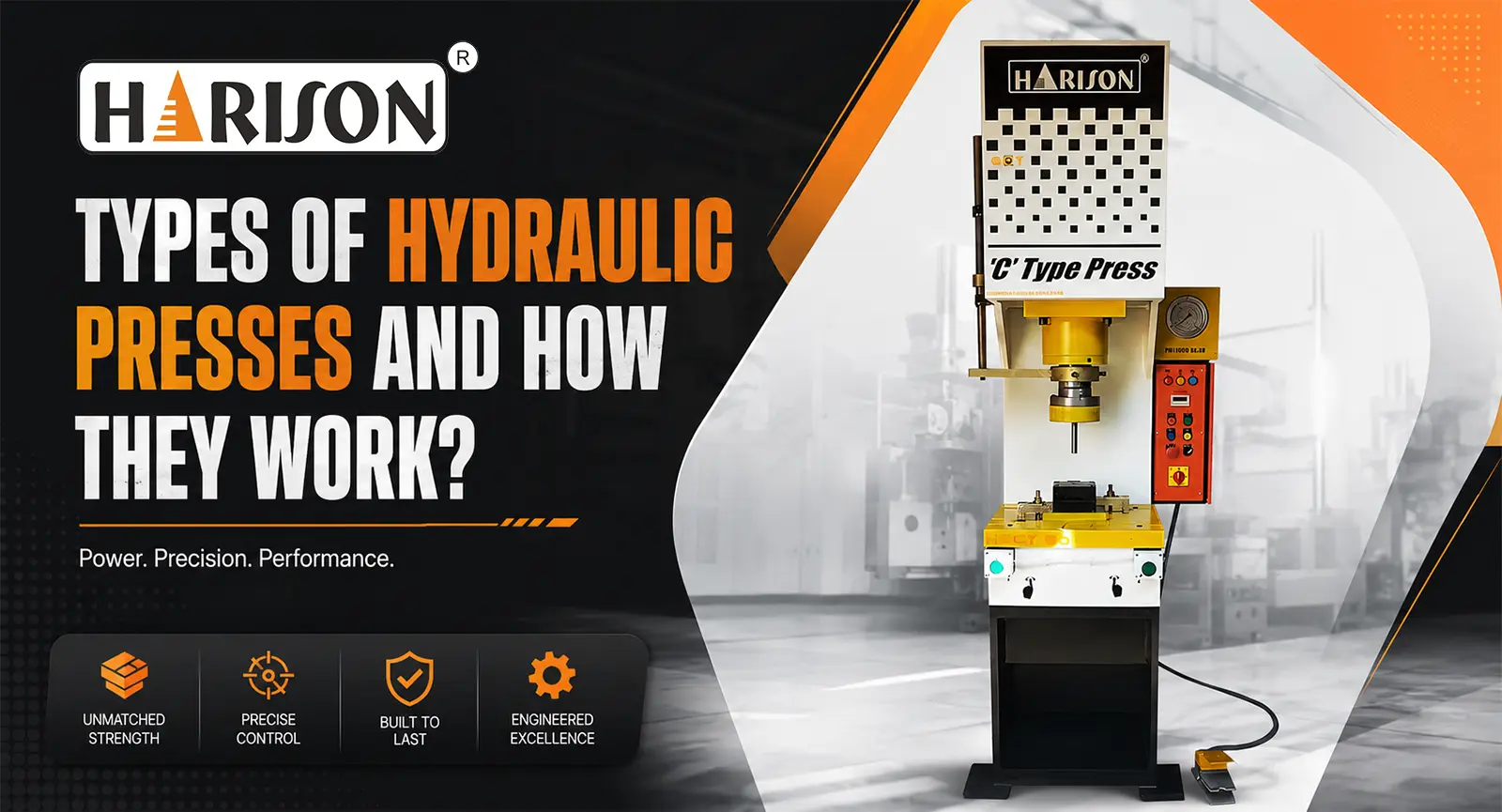
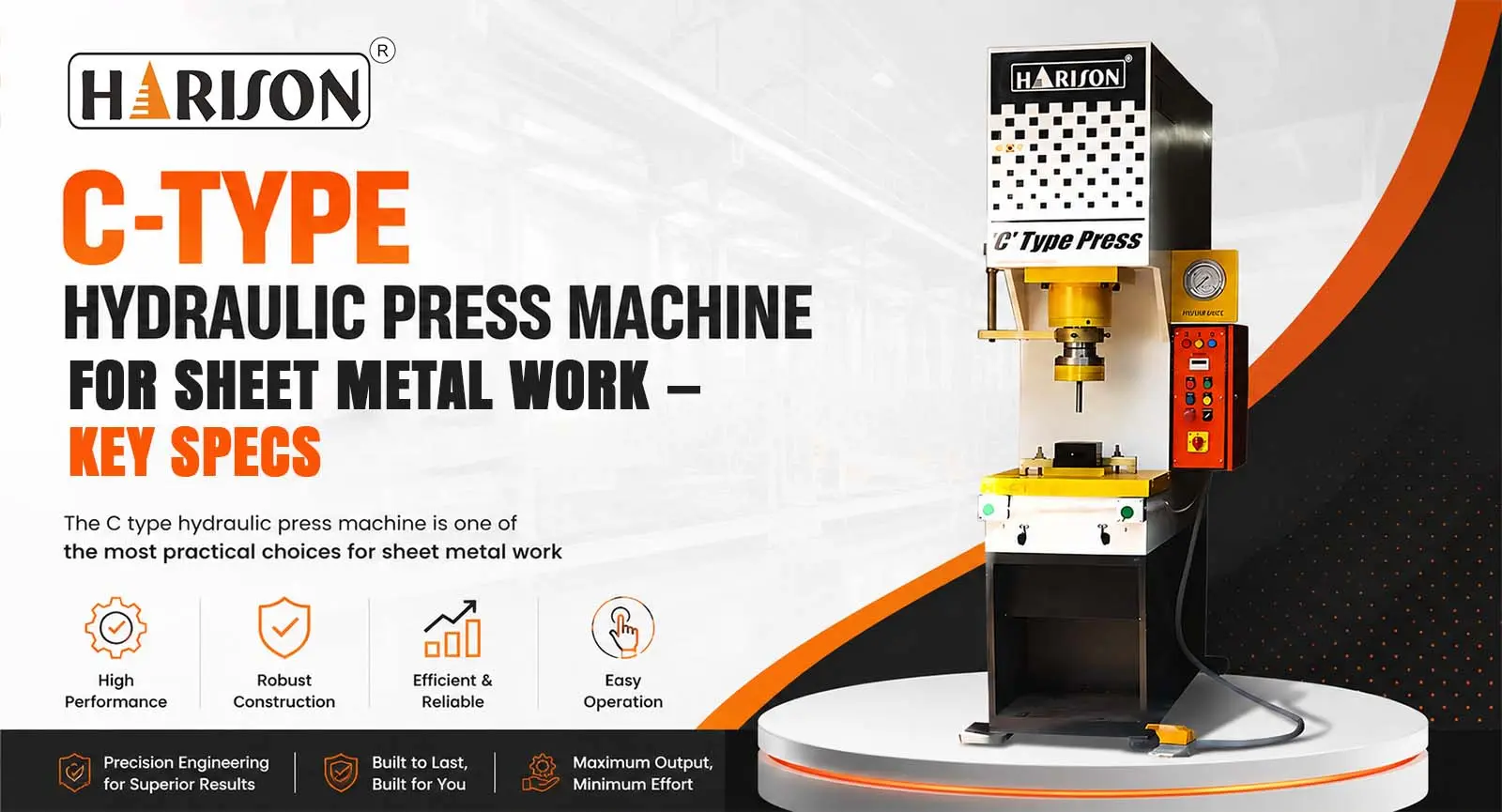
  1. C Frame Hydraulic Press: A C Frame Hydraulic Press has an open-front design that makes loading and unloading materials easier. It is commonly used for punching, bending, and assembling work in small and medium industries. 
  2. Deep Drawing Hydraulic Press: A Deep Drawing Hydraulic Press is used to shape flat metal sheets into deep or hollow products like sinks, containers, and automobile parts. It provides smooth finishing and accurate shaping during production. 
  3. Hydraulic Shop Press: A Hydraulic Shop Press is mainly used in workshops and repair centers for pressing, straightening, and removing machine parts. It helps workers apply strong pressure with less manual effort.
  4. Four Pillar Hydraulic Press: A Four Pillar Hydraulic Press uses four pillars to distribute pressure evenly during operation. It is widely used for heavy-duty industrial applications like molding, stamping, and metal forming.
  5. Automatic Hydraulic Press Machine: An Automatic Hydraulic Press Machine performs pressing operations automatically with minimal manual work. It improves production speed, reduces labor effort, and maintains consistent manufacturing quality.

Different types of hydraulic presses are designed for different industrial needs, from small workshop tasks to heavy manufacturing work. Choosing the right hydraulic press helps improve production efficiency, work accuracy, and overall machine performance.

Where You’ll Usually See It

A Hydraulic Press Machine is used in many industries because it makes difficult work easier and more controlled. Here are some common places where it is usually used:

  • Car factories for shaping and fitting parts
  • Metal workshops for bending and pressing sheets
  • Plastic industries for making molded products
  • Assembly units for fitting components
  • Recycling plants for compressing materials

In all these places, it helps reduce effort and makes work faster and smoother.

Things to Think About Before Choosing One

Before you go for a Hydraulic Press, it’s better to pause and think about how it will actually fit into your work. A little clarity here can save a lot of trouble later and help the machine work better for you in the long run. Here are a few important things to consider before choosing one:

  • How heavy the work is:  Choose a press that matches the kind of force your daily tasks need 
  • What you’ll be working on: Different materials need different handling, so keep that in mind 
  • How often you’ll use it: If it’s going to run all day, it should be strong enough for regular use 
  • Space in your area: Make sure your workspace has enough room for safe and easy operation

When you look at these points properly, a Hydraulic Press Machine feels easier to use, works more smoothly, and lasts longer without unnecessary issues.

Conclusion

A Hydraulic Press makes tough workshop and factory jobs much easier by handling pressing and shaping work with smooth control. It helps save time, reduces effort, and makes daily tasks more manageable. Different types are used depending on the work, but all of them are built to make life simpler on the shop floor. If you are planning to choose one, going with a trusted brand like Hari Engineering Works can give you better confidence, reliability, and long-term support for your work.

29 Jan, 26

Maintenance Tips to Extend the Life of a Hydraulic Press Machine

Maintenance Tips to Extend the Life of a Hydraulic Press Machine

A hydraulic press machine is the workhorse of many factories. It spends all day crushing, bending, or shaping metal, which puts an incredible amount of stress on its internal parts. Since it works under such high pressure, you can’t just turn it on and forget about it. Taking care of it is a must. 

Good maintenance keeps the machine running without a hitch, keeps everyone safe, and stops those sudden, expensive breakdowns. Plus, it helps the machine last for many years and saves you a ton of money on repairs if you take good care of it.

Simple Daily and Weekly Habits

You don’t need to be a master mechanic to do the basics. One of the simplest things you can do is check the hydraulic oil level every morning. If the oil gets too low, the machine will start struggling. You should also look at the color and feel of the oil. Clean oil is like a shield for the machine’s guts, making sure everything moves smoothly without any jerking or sticking.

You also need to keep your eyes on leaks. Take a quick look at the hoses, the seals, and where the pipes connect. Even a tiny drip can lead to a loss of pressure and cause real damage over time. 

Don’t forget about the filters, either. A clogged filter is dangerous because it lets dirt get into the system, which can scratch up the cylinders or ruin the valves. A quick five-minute walk-around every few days is usually enough to spot most trouble.

Monthly and Quarterly Maintenance Tasks

Once a month, it is worth spending a bit more time on the machine. Hydraulic oil doesn’t stay good forever; it loses its punch as it gets old and dirty, so be sure to swap it out when the manual says so. This is also the right time to check your pressure settings. You want to make sure the machine isn’t pushing harder than it was built to, as that’s a fast way to break something.

Furthermore, check the actual “bones” of the machine. Look at the frame, the rails the press moves on, and all the big bolts to see if anything has vibrated loose. While you are at it, test the safety gear. Make sure the emergency stop buttons and the guards work perfectly every single time.

Smart Long-Term Maintenance Habits

If you want a machine to last twenty years, you need a plan. It helps to keep a simple notebook or log of when you changed the oil or fixed a leak. This helps you see if the same problem keeps happening. Also, try to keep the workspace clean. Dust and metal shavings are the enemy; if they get into the machine, they cause friction and wear parts down way too fast.

Training the people who run the machine is just as important as greasing the parts. If an operator knows how to use the hydraulic press machine correctly, they won’t overload it or try to force it to do something it wasn’t meant for. Every once in a while, it’s a good idea to have a pro come in for a full service to make sure everything is perfect.

Common Problems and How Maintenance Helps

Most of the common problems with these machines are easy to avoid. For example, if the machine starts getting too hot, it’s usually because the oil is filthy or someone is pushing it too hard. If the press starts moving like it’s tired or slow, you probably have low oil or some air trapped in the lines.

If you start hearing weird knocking or grinding noises, that’s the machine telling you a part is about to fail. Catching these signs early is the secret to a long-lasting press.

Conclusion

Taking care of a hydraulic press machine isn’t rocket science, but you do have to be consistent. Simple daily checks and regular oil changes are what keep a machine reliable and safe. When maintenance becomes a habit, your machine will run better, stay quieter, and last a whole lot longer.

Hari Engineering Works knows exactly what it takes to build a press that survives years of hard work. We manufacture a wide range of hydraulic press machines, including C-frame, H-frame, and four-pillar models, designed to handle demanding industrial work. Backed by years of engineering experience, our machines are built to deliver strong performance while remaining easy to maintain.


24 Nov, 25

Hydraulic Press Machines: An In-depth Exploration

Hydraulic Press Machines: An In-depth Exploration

Are you looking for a reliable machine that generates a huge force and is also cost-efficient? Well, the hydraulic press machine is the ultimate solution. The compressive force generated is distributed in all directions, which allows precise shaping, molding, and assembling of the given workpiece. The durability and precision of the machine make it a cornerstone of modern manufacturing, automobile plants, metalworking workshops, and industrial production, among others. In this post, we will explore everything about the automatic hydraulic press machines, ranging from the types to their benefits. 

Understanding a Hydraulic Press Machine

Now that you know what a hydraulic press machine is, let us tell you that it works on Pascal’s law, in which pressurized liquid pressure is equally distributed in all directions. It leads to precise operations. The hydraulic press machines consist of:

  • Hydraulic cylinder
  • Ram or plunger
  • A hydraulic power unit
  • Control valves
  • Sturdy frame

When the hydraulic fluid is pumped into the cylinder, it pushes the ram down with significant force. It allows precise punching, shaping, and compressing of the workpiece. 

Types of Hydraulic Press Machine 

  • C-Frame Hydraulic Machine:

Known for its C-shaped design, this kind of press allows three-sided access to the work area, making it ideal for operations requiring loading convenience and operator visibility. 

  • H-Frame Hydraulic Machine:

This pressing machine is used in the workshop due to its sturdy build. The adjustable bed height and high-pressure make it apt for bending, straightening, and metal fabrication, among others. Due to its lesser need for maintenance and multifunctional nature, it is favored by the manufacturing plant. 

  • Four Pillar Hydraulic Press:

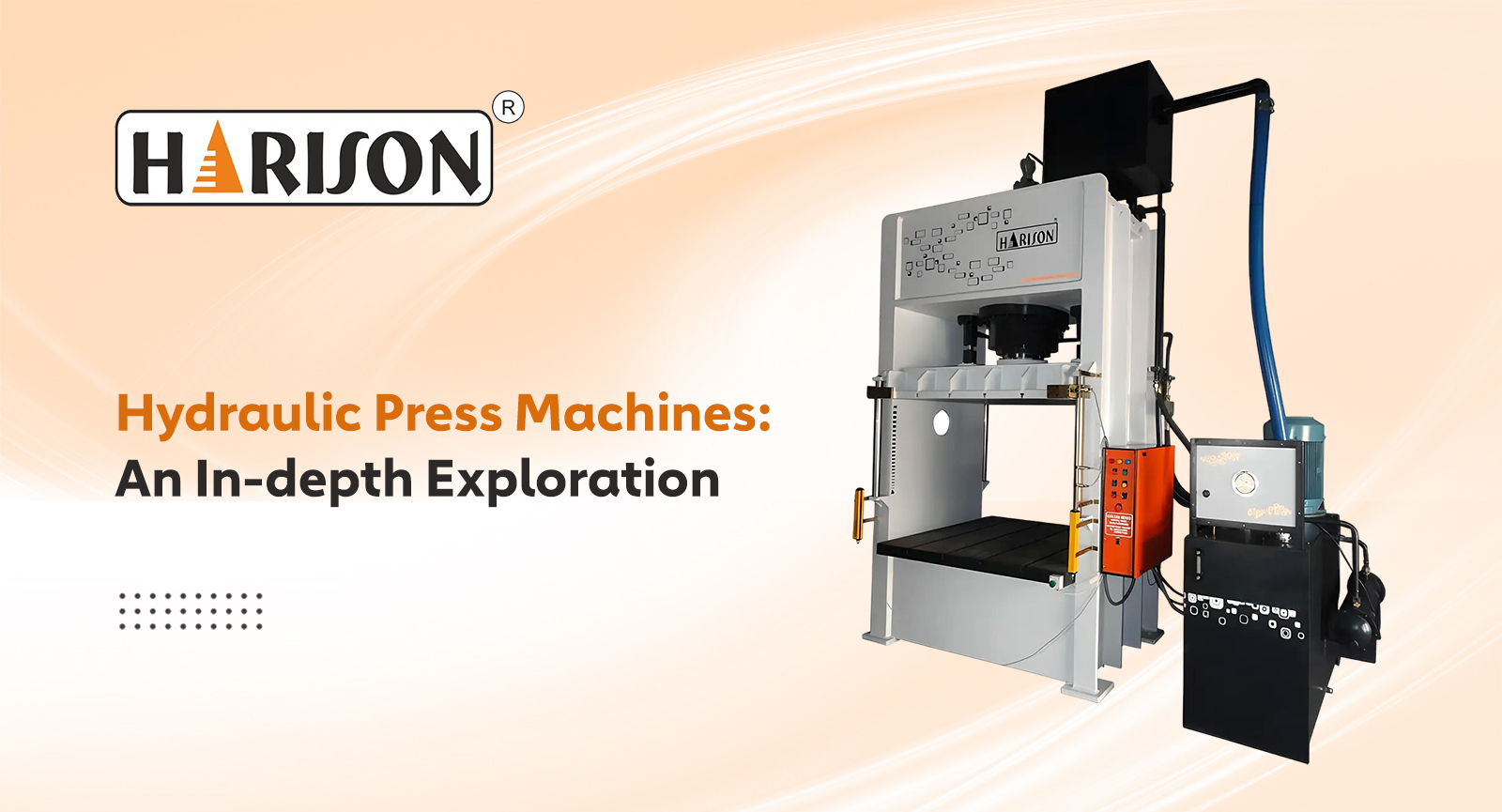
Designed for heavy-duty operations, the four-pillar hydraulic press machine ensures stability and uniform pressure distribution. It is suitable for large dies, molds, and big components. This kind of hydraulic press is apt for mass production, where reliability is needed under heavy load processing. 

Benefits of Hydraulic Press Machine 

The hydraulic press has several benefits over the mechanical press and other kinds of forming equipment. 

  • High Force:

The hydraulic machine drives a high amount of force, which the need of the massive mechanical force. So, it ensures efficiency without having to hire labor. 

  • Precise Control:

The operators can finely adjust pressure, speed, and stroke length, which helps in producing consistent results.

  • Versatile:

From forming, bending, to molding, the hydraulic press machine can handle a wide range of tasks. 

  • Cost Efficiency:

The hydraulic machine is compact in size and also saves energy. The extreme power is generated due to the hydraulic force, which costs less as compared to electrically powered machines.

  • Smooth Operations:

The hydraulic system provides smoother motion and built-in pressure relief, which also reduces the risk of mechanical failures.

Wrapping Up… 

The hydraulic press has transformed industrial production with power, accuracy as well and versatility. So, whether you are running a small workshop or a large manufacturing unit, this hydraulic machine is the one for you. This post will help you get in-depth details of the hydraulic machine. Understanding how the machine works will help you make a better investment decision. Hari Engineering Worksoffers a top-quality hydraulic press machine at a competitive price for maximum value.

25 Mar, 25

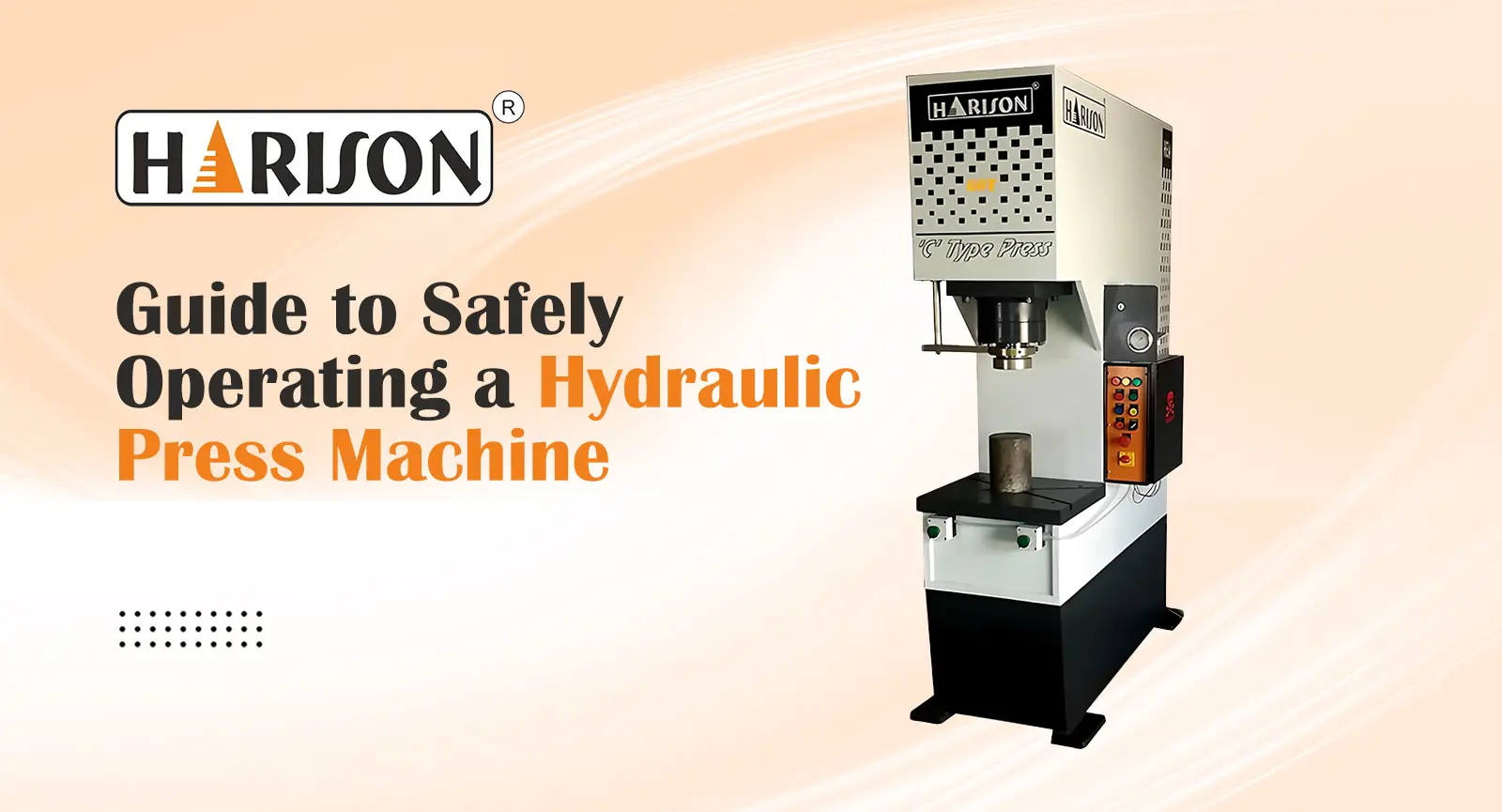
Guide to Safely Operating a Hydraulic Press Machine

Guide to Safely Operating a Hydraulic Press Machine

Hydraulic press machines are essential components of every industrial machine shop, serving a wide range of specialized and general purposes. However, they represent a significant danger of harm to operators. How can you ensure that you are as safe as possible near this heavy equipment?

As an owner or operator, you should already force employees to follow basic procedures and use safety equipment.  However, machines are not necessarily safe on their own.  Mechanical faults and human mistake are also possible.  Your machine shop cannot function well until safety precautions are in place. Our hydraulic press safety advice can help you and your staff stay safe.

Most Common Hydraulic Press Machine Workplace Accidents

Hydraulic presses are tools, not toys. And, like any tool, if used incorrectly, they can cause accidents – even if you believe you’re being careful. Because of the nature of the hydraulic press and its duties, hand and finger injuries are the most common at work. Pinching and crushing events are widespread.  

When using a press, personnel must position and relocate metal beneath the ram or near the bending point, exposing them to a high-risk scenario. Approximately 49% of power press injuries need amputation.

Press machines have a high risk of failure if they are not properly maintained or operated, or if a preparation step is neglected. With a hefty ram under high pressure and no failsafe, the possibility of trapping a body part in the press is greater than you may think.

So, what are the potential risks of a hydraulic press machine?  

Catastrophic failures can provide unanticipated risks, such as:

  • Pressure failure can cause the ram to drop and smash whatever is underneath it at the moment.
  • Cracked or loose connectors can explode and cause hoses to separate.
  • Metal may fracture under pressure, resulting in jagged fragments.
  • Workers in hazardous settings may get lacerations and puncture wounds from sharp metal, pressured hydraulic fluid, and other projectiles.

The Best Hydraulic Press Precaution & Safety Tips!

As a business owner or machinist, you are concerned about the safety of your hydraulic press operators. To reduce occupational risks for workers, you must follow our hydraulic press safety regulations and comply with:

Maintenance: Preventative maintenance is one of the most effective strategies to avert probable failure and damage.  Hydraulic press machines are constantly subjected to extreme pressure, heat, and wear.  Parts and fluids need to be cleaned and replaced on a regular basis since they wear out and are used extensively.

Inspection: Inspect your machines thoroughly on a regular basis.  You should inspect any hoses and seals for damage, fittings for cracks and tight fit, fluids for debris or deterioration, and the overall body of the machine for cracks.  Pay special attention to any extreme vibrations or weird noises while the equipment is working, since they may signal a need for immediate repair.

Cleanliness: Keeping your hydraulics well-lubricated and the surrounding area clean is critical not just for the machine’s proper operation, but also for the safety of people who use it.  Lubrication is required for a clean stroke, less friction, and a pleasant user experience.  Clutter, grime, and slick oil may all create hazardous conditions.  Make sure there is no risk of sliding or catching clothes on waste objects.

What Safety Devices Must Be Used When Operating a Hydraulic Press?

One of the most effective methods to keep your employees safe is to require the usage of safety equipment when running a hydraulic press machine.

Personal Protective Equipment

To avoid avoidable hydraulic press injuries, all operators must wear personal protective equipment (PPE).  Items include:

  •  Protect yourself from flying debris by using safety glasses or face masks.
  •  Ear muffs that fulfill noise exposure standards set by regulatory agencies.
  •  Close-fitting garments, strong aprons, or vests can help limit the likelihood of the machine seizing clothing.
  •  Protective footwear with added safety elements including steel toe inserts and tall uppers.
  •  Gloves and arm covers.
  •  Protective headgear.

Final Words

Because hydraulic press machines contain heavyweight, high-pressure, and hazardous moving parts, hydraulic press safety regulations are critical. With regular practices and failsafe mechanisms in place, your machinists can work efficiently while remaining certain that they are utilizing a safe device.


25 Feb, 25

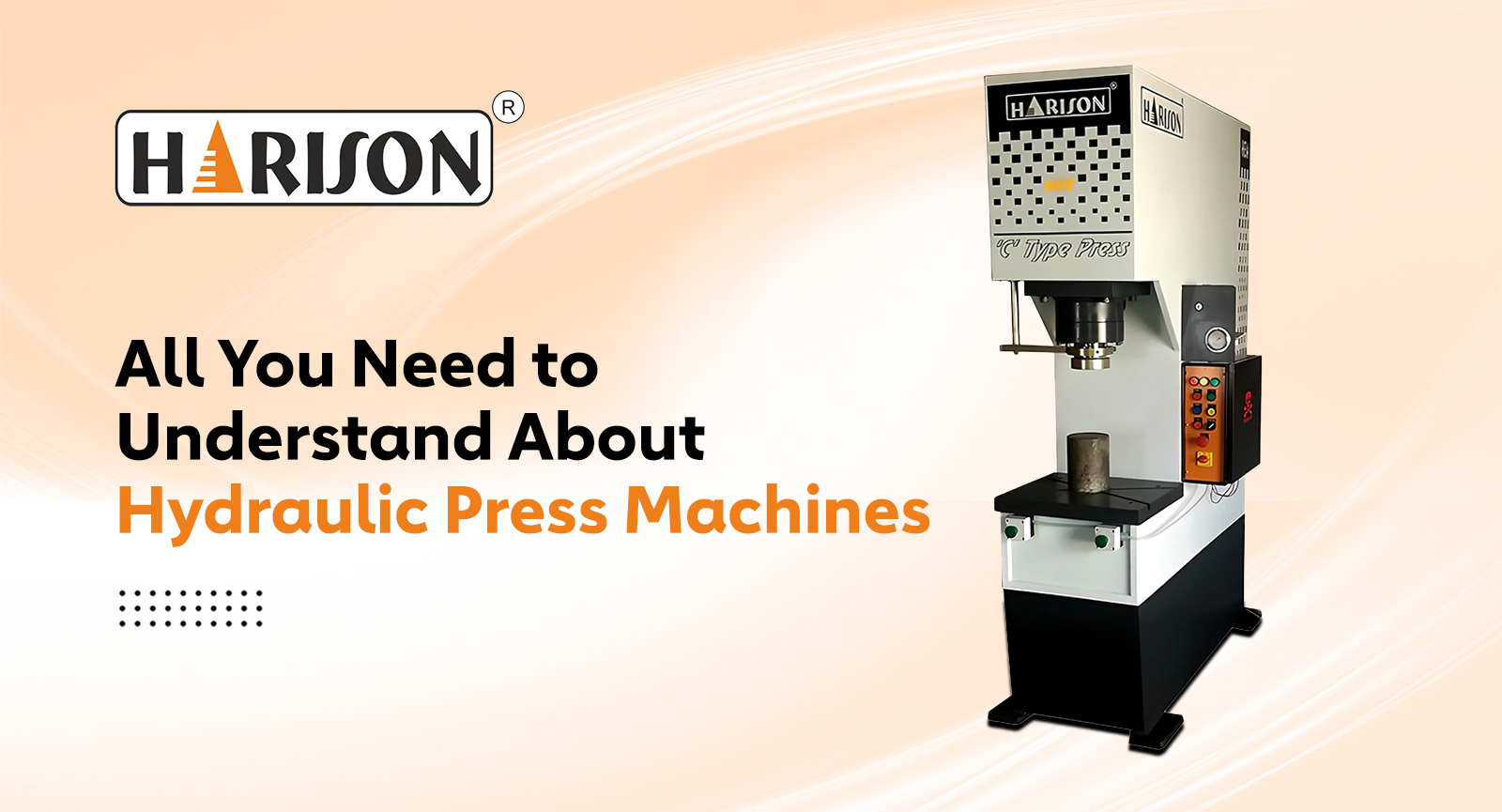
All You Need to Understand About Hydraulic Press Machines

All You Need to Understand About Hydraulic Press Machines

A hydraulic press machine has several applications in industries. It performs the job by generating compressive force using a hydraulic cylinder. The machine comprises a plate that holds the workpiece for sample processing. It also features a piston that acts as a pump, imparting mechanical force of modest size to the limited region of the sample. In this blog, you will learn everything about a press machine.

What is a hydraulic press machine?

A press machine shapes and deforms different types of metals by transferring energy through liquid. It relies on Pascal’s principle. The machine is mostly used to increase the application of lesser forces. Pascal’s principle asserts that the strength of pressure in a static fluid is transferred evenly in all directions.

Hydraulic presses are made up of three components: the mainframe, the power system, and the hydraulic control system. The pressure in a liquid is applied by a pump that functions similarly to a pump and generates mechanical force. Various types of presses, including the H-frame and C-frame, are intended to handle a variety of industrial applications.

The Working of Hydraulic Press Machines

These press machines often employ numerous tiny rams instead of a single big ram to manage thrust forces more effectively. The number of rams required is determined by the workload. The hydraulic pressure of the fluid propels the ram. The high-pressure liquid is supplied by a pump and hydraulic accumulator. The hydraulic accumulator serves as a connecting point between the pump and the rams. When the press is motionless, the high-pressure liquid is stored in a hydraulic accumulator. When a high push is required for operation, a press is utilized. This operating mechanism is common to equipment such as the 20-ton and 50-ton press machines, and many bigger presses.

Quality matters:

Do not overlook the quality of the four-pillar hydraulic press. It is important to note that the market provides a variety of quality based on the demands of the consumer. The raw materials utilized by the manufacturer and the technology with which the machine is equipped should be of the highest quality available on the market.

Benefits of Hydraulic Press

  • Consistent tonnage –
  • A press machine may provide full pressing force throughout the stroke. This increases your control over travel distance, pressure, and return position.  

  • Customization –
  • These presses can handle even the most intricate components. We may adapt an existing design or create a bespoke press to match your exact needs 

  • Small Footprint:
  • Hydraulic presses have a tiny footprint and can create tremendous pressure across a limited surface area. As a result, they use far less space than many other industrial devices.

  • Economical –
  • Because of the machine’s simplicity, they seldom break down, resulting in lower maintenance costs. However, if it fails, replacement components are readily available.  

  • Longer Tool Life –
  • A hydraulic press tool is intended to match the application rather than the press. Furthermore, overload prevention reduces damage to tooling, increasing tool life.  

Conclusion

At Harison, we give quality and affordable prices. We offer a wide variety of hydraulic press machines and workshop presses. In addition, we provide a CNC press brake, power press machine, shearing machine, and hydraulic punching machine to suit all of your pressing requirements. If you need any further assistance, contact us today.

26 Nov, 24

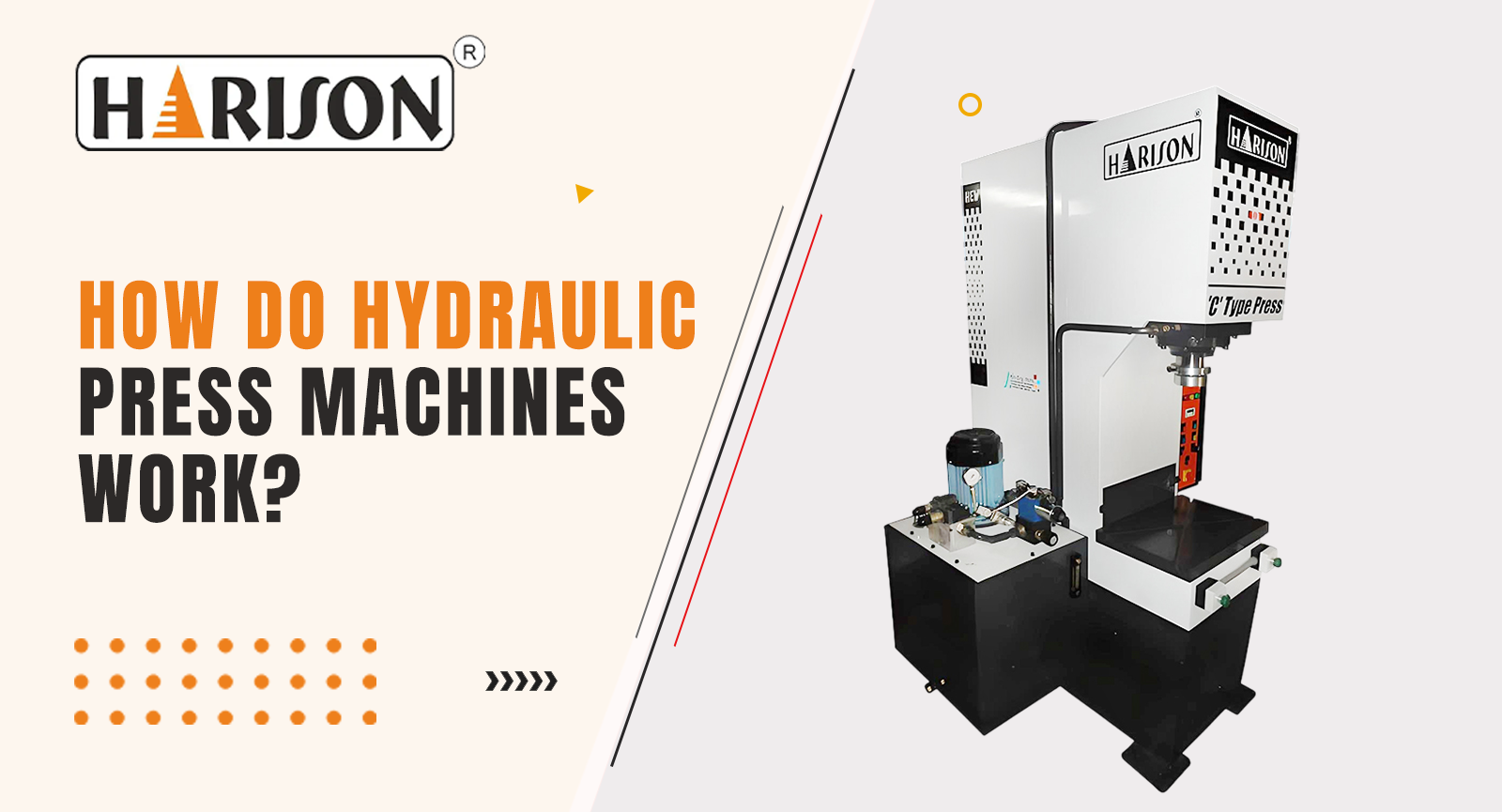
How do Hydraulic Press Machines Work?

How do Hydraulic Press Machines Work?

One of the virtual equipment you may encounter is a hydraulic press machine. It is a basic apparatus that compresses a variety of materials, including metal, plastic, concrete, and chemicals. 

Let us go over the many sorts of hydraulic presses, how to operate them properly, and when you should utilize them.

What is a hydraulic press machine?

A hydraulic press is a machine press that generates compressive force through a hydraulic cylinder, and it employs a hydraulic lever in place of a mechanical lever.

During this operation, the piston rod, pushrod, and block replace the jackscrews, crank, and eccentric.  Hydraulic presses employ a hydraulic cylinder carrying a liquid, such as oil. These tools are helpful for applying force using a hydraulic cylinder’s mechanical advantage. 

The machine can be single-acting or double-acting, depending on the direction of pressure application. Hydraulic presses are widely used in industry, particularly for shaping metal and plastic parts, but they may also compress materials such as dirt or stone.

The Hydraulic Press Machine Working Principle

A hydraulic press machine employs Pascal’s law to generate force by compressing a confined fluid. The law states that when pressure is applied to a confined liquid, the coercion change occurs across the liquid. Even if you apply pressure to a small portion of the device’s surface, mechanical power is conveyed throughout. There are two pistons in the automated press: one smaller in the region that pumps out a tiny amount of force onto particular materials, and another bigger that provides greater power than the first.A hydraulic press machine works by creating a pressure difference between two pistons, resulting in a compressive force that is several orders of magnitude larger than that delivered mechanically. 

Its most basic version comprises two pistons of equal size linked by a fluid-filled tube. When the operator pushes one piston up, the fluid in the cylinder is forced through the pump and into the second piston. It applies an equal amount of force downward to both pistons. As a result, any substance between them experiences pressure in all directions.

Uses of Hydraulic Press Machines

A hydraulic press is utilized for nearly every industrial application. However, it is mostly employed to convert metallic items into sheets of metal. In other sectors, it is used to thin glass, make powders for cosmetics, and shape tablets for medicinal usage. Other typical uses of hydraulic presses include the following:

For smashing automobiles: A hydraulic press is the core of every automobile crushing mechanism. A hydraulic motor pumps fluids into the cylinders at high pressure throughout this procedure. The fluid pressure causes the plates to rise, and with a huge force, the plate is forced onto the automobile, crushing it.

Use fat-free cocoa powder: Chocolate liquor is a liquid produced during the processing of cocoa beans. This liquid is pressed out with a hydraulic press to produce fat-free cocoa powder. After this stage, the liquid is further processed to produce a powder. This yields fat-free cocoa powder.

For sword manufacturing: A hydraulic press is used to flatten raw steel during the sword-making process.

Look for the Reputed Hydraulic Press Machine Manufacturers!

Hydraulic machine press operation is extremely safe since there is little to no chance of leaks caused by a lack of air pressure. However, adequate maintenance is still required to guarantee that everything runs well. Hari Engineering Works, a well-known service provider specializing in hydraulic press machines, provides the finest services and maintenance for your equipment. Harison hydraulic presses are designed to improve productivity by increasing production efficiency, profitability, and overall performance.