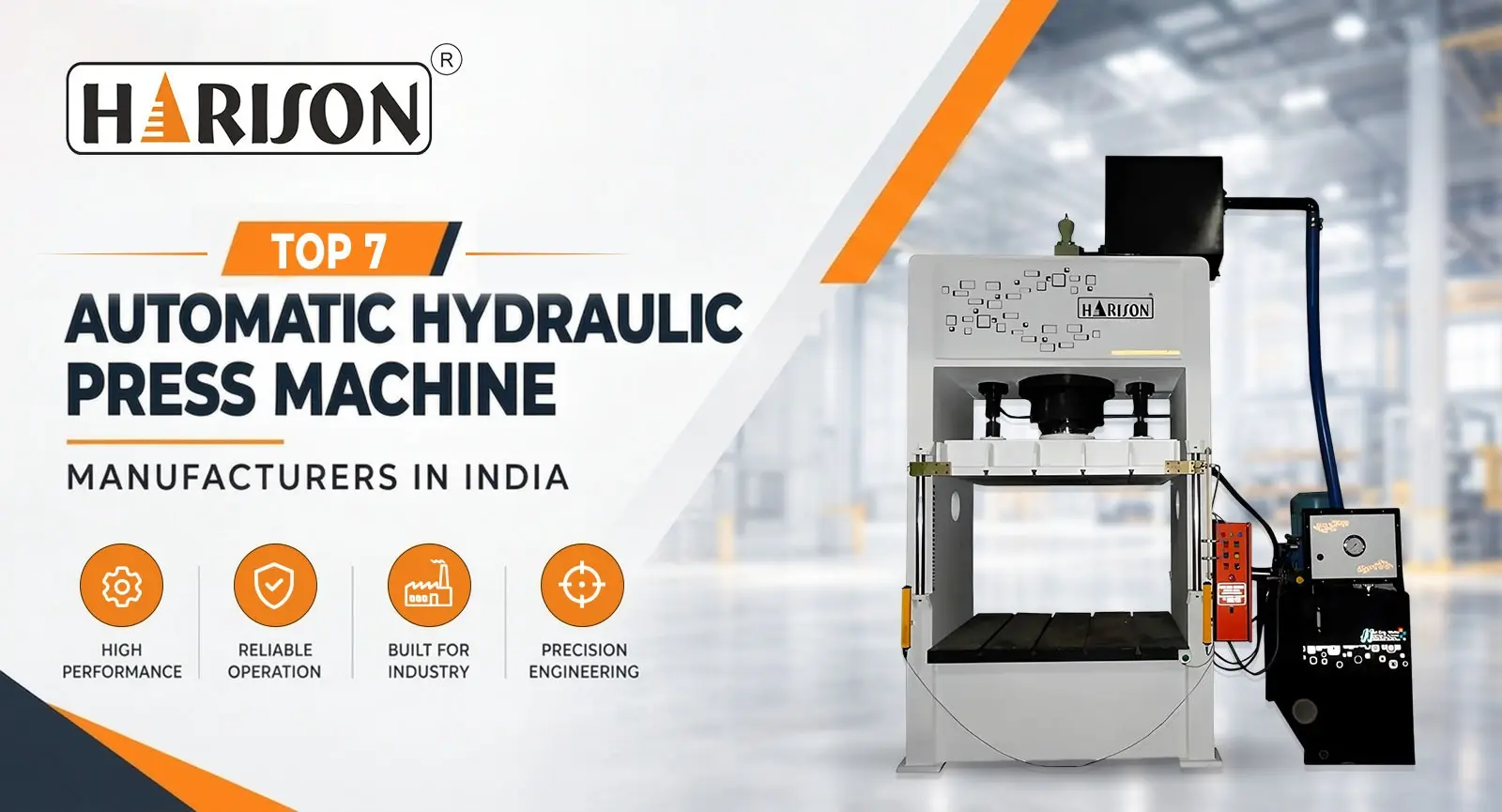
Top 7 Automatic Hydraulic Press Machine Manufacturers in India
Overview – Every second manufacturer claims to be among the best in the business, which leaves buyers with little to actually compare once the sales pitch is set aside. This blog puts together seven names in the Automatic Hydraulic Press Machine space along with the details that matter: their location, years in the trade, and the kind of work each one specialises in, so you have something solid to go on before reaching out for a quote.This blog covers:
Introduction
An automatic hydraulic press machine uses fluid pressure to apply a controlled, steady force for jobs like forming, punching, drawing, clinching, and molding, with the pressing cycle running through set controls rather than manual operation each time. Buyers across India use these machines in metal working, plastics, rubber, plywood, and general fabrication units, and the market has no shortage of manufacturers making similar claims about quality and precision.Most product pages describe the frame types and tonnage in nearly the same words, which makes it hard to judge one supplier against another from the outside. The list below covers seven names that come up often when people search for a reliable automatic hydraulic press machine supplier, along with what sets each one apart and what kind of buyer each is best suited for.
Here are Top Automatic Hydraulic Press Machine Manufacturers
1. Hari Engineering Works
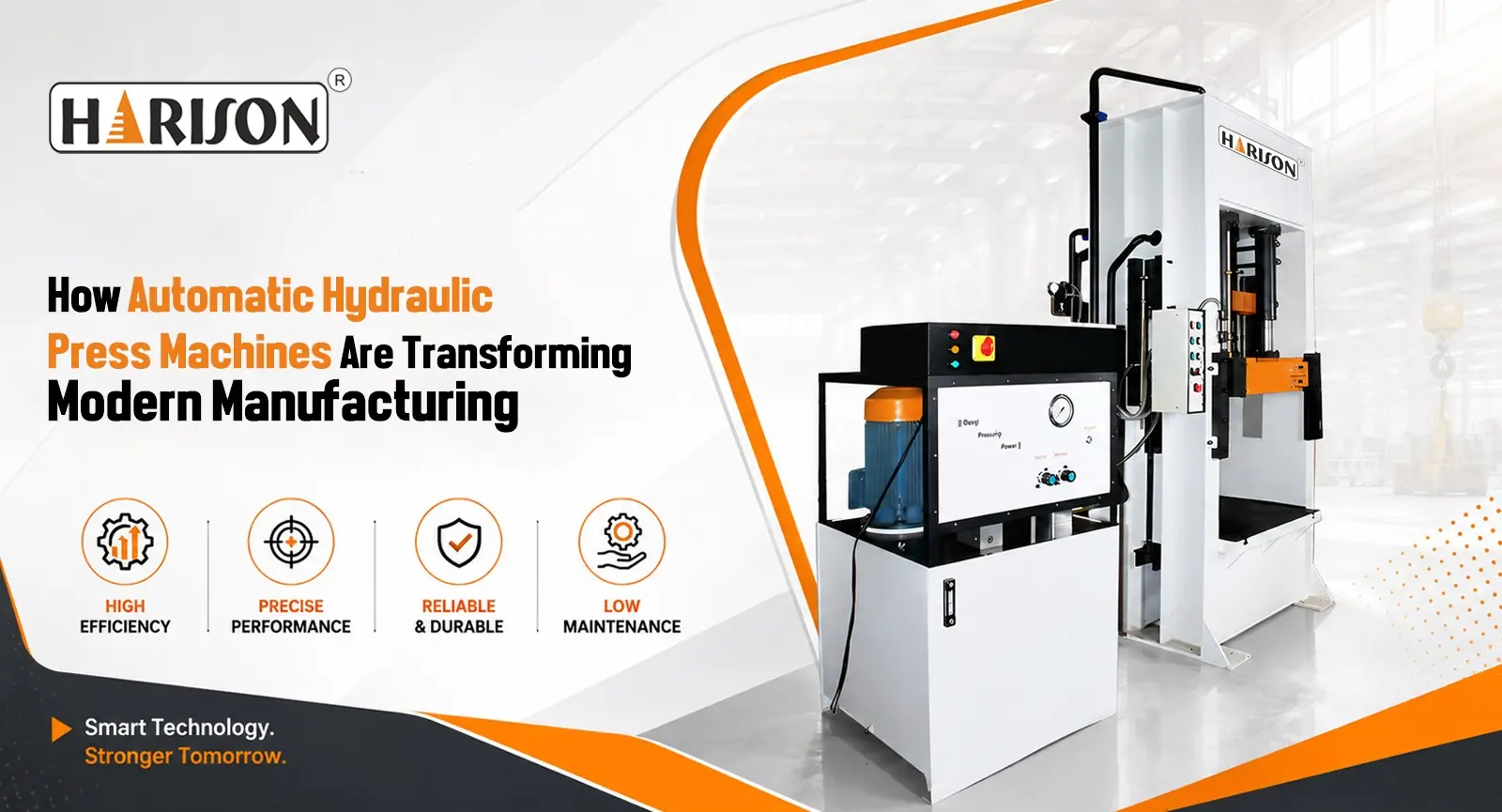
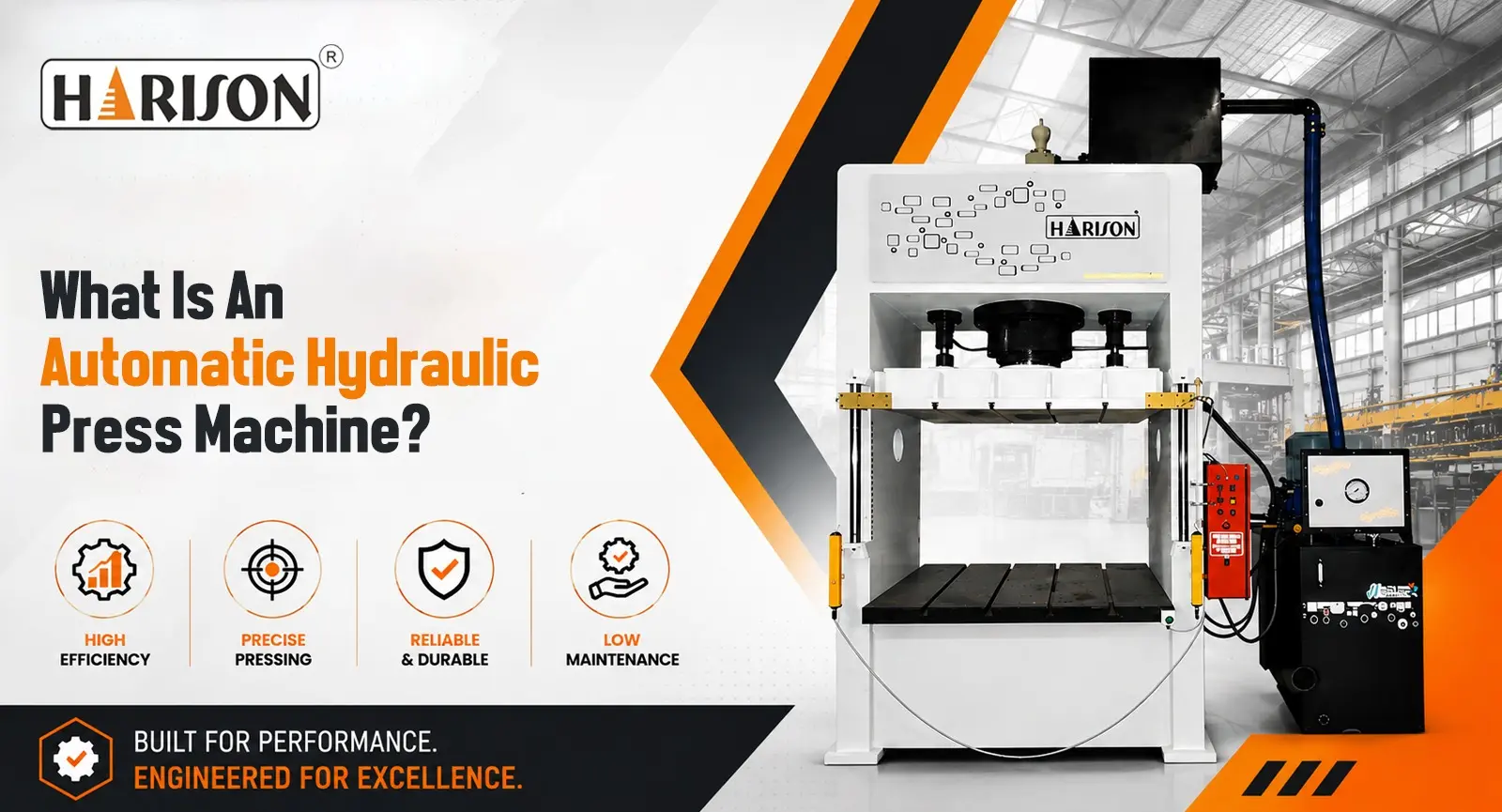
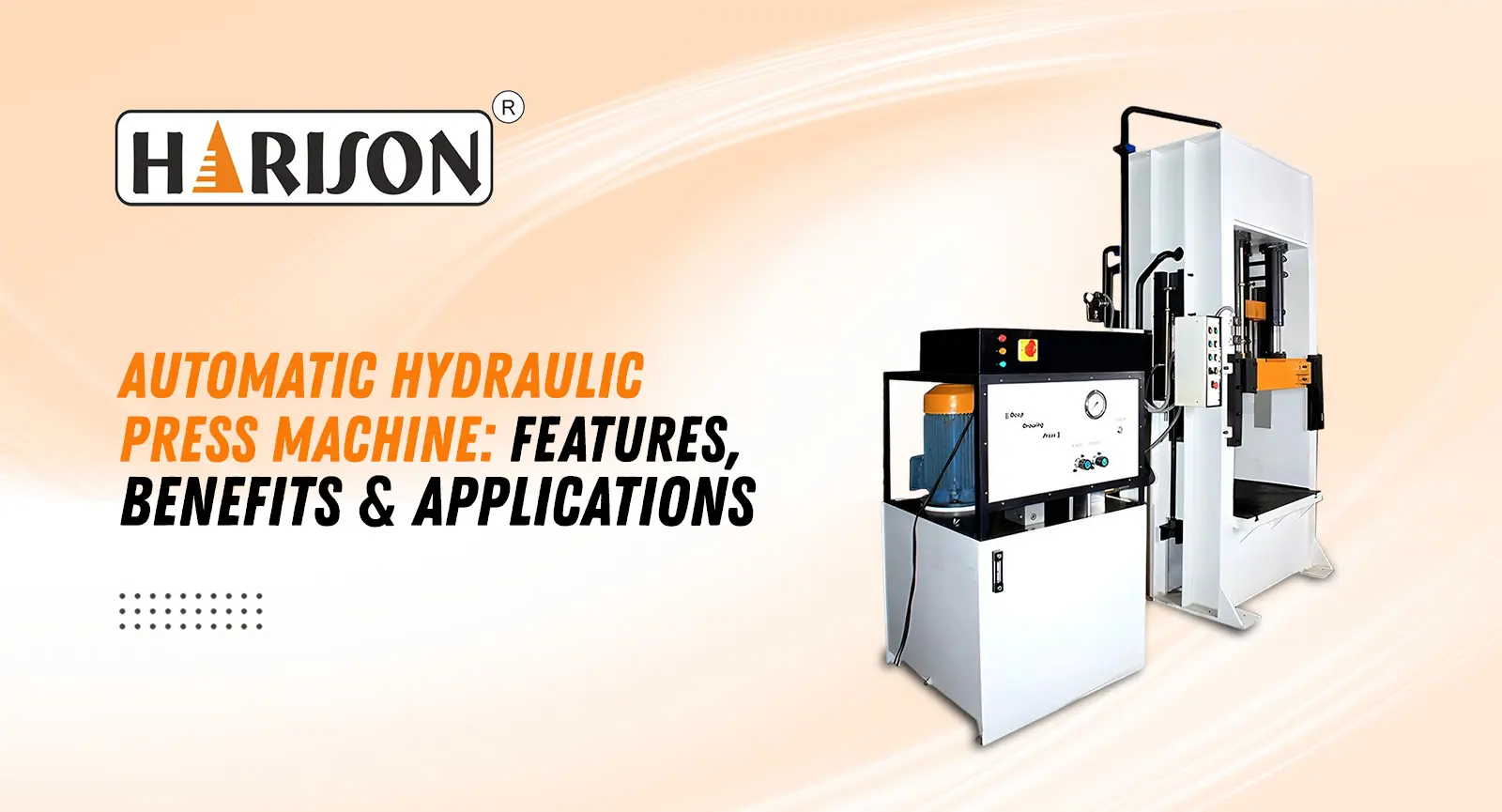
Hari Engineering Works has been in the hydraulic press trade since 2002, working out of Rajkot, Gujarat, under the Harison name. As one of the renowned automatic hydraulic press machine manufacturers in India, their automatic hydraulic press machine line-up runs across C-type, H-type, four-pillar, deep drawing, and double-action deep drawing presses, meant for moulding, punching, and clinching applications. Every machine is built using good-quality raw material and is checked thoroughly before it leaves the factory, and their engineers are happy to guide you through the selection before you place the order, along with support once the machine is at your site.2. Rajesh Machines (India) LLP
Rajesh Machines has been manufacturing power presses and hydraulic press machines from Rajkot since 1984 and now runs both an India office and a Middle East office to serve export orders. Their hydraulic range covers C-frame, H-frame, four-column, and workshop presses, with capacities running from around 10 tons up to 100 tons depending on the application. Buyers working across metal, plastic, rubber, or wood forming often shortlist them for the sheer range of tonnage and frame types on offer, and their export operation means they are also set up to handle larger international orders.3. Santec Exim Pvt. Ltd.
Santec Exim, with manufacturing units in Haryana and Delhi, builds a wide range of hydraulic presses, including H-type fabricated four-column presses, C-frame presses, straight-sided presses, and 8-point gib guided presses for compression molding and deep drawing work. Beyond standard models, they also supply rubber and plastic processing machinery, which makes them a useful option for buyers whose requirement goes beyond a single press type. Their straight-sided press line uses a centralized hydraulic control system for precision in repeat cycles.4. Ganesh Machine Tools
Ganesh Machine Tools, based in Rajkot, has been in the machine tools business since 1969 and offers both hand-operated and power-operated hydraulic press machines alongside their wider range of lathe and drilling equipment. Buyers who need a hydraulic press along with other workshop machinery, such as lathes or drilling machines, in a single order often find this a practical choice, since it means dealing with one supplier instead of several.5. Vedant Engineering Services
Vedant Engineering Services is a Nashik-based, ISO 9001:2008 certified firm that has been making hydraulic equipment since 1996, covering hydraulic presses, power packs, and cylinders. Where they really stand out are special-purpose machines and automation work, so if your requirement is a press built around a particular fixture, a PLC sequence, or a production step that is unique to your line, this is a name worth calling. They also take up instrumentation and control panel work along with the press, so you are not left coordinating with a separate automation vendor on the side.6. Srichakra Engineering Equipments
Srichakra Engineering Equipments, headquartered in Bangalore, has been in the hydraulic press business since 1985 and counts over 1000 clients and more than 5000 presses supplied across the plywood, laminate, and interiors trade. Their Automatic Hydraulic Press Machine offering is built specifically for this segment: plywood presses, pre-press or cold press units, decorative laminate presses, and veneer bonding presses, which makes them the better pick if your business is wood panel or laminate manufacturing rather than general metal work.7. Yashwant Industries
Yashwant Industries, based in Ahmedabad, has over four decades of experience manufacturing and exporting hydraulic press machines along with cutting, welding, and rolling equipment for metal fabrication. Along with standard hydraulic presses, they also build full plant process machinery for stainless steel products, which suits buyers setting up a production line rather than sourcing a single machine.How to Pick the Right Manufacturer for Your Work
With this many options, the right choice usually comes down to three things: the tonnage and frame type your job actually needs, whether the press has to be built around your own fixture or fits a standard model, and how the manufacturer supports you once the machine is running.A press bought only on price, without checking these three points, is often the one that gives trouble a few months in. It is worth asking each shortlisted supplier about warranty terms, spare parts availability, and whether they have delivered machines for a similar application before.
It also helps to compare more than one quote before deciding. Two manufacturers can offer an automatic hydraulic press machine with almost the same tonnage rating, yet differ quite a bit in frame construction, cylinder quality, and how quickly they respond once a part needs replacing.
Asking for a factory visit, or checking with existing customers if the supplier can arrange it, gives you a far better sense of the machine than a specification sheet ever will.
Frequently Asked Questions
Which type of hydraulic press is best for general metal forming work?
An H-frame or four-pillar press is usually the starting point for general metal forming, since these frames handle a wide range of forming, punching, and drawing operations well. The exact model still depends on your tonnage requirement and the size of the component being pressed, so it helps to share your part drawing with the supplier before finalizing.
Is it better to buy a standard model or a custom-built hydraulic press?
A standard model is usually faster to deliver and costs less and works well if your operation matches common tonnage and frame sizes. A custom-built press makes more sense when your job needs a specific fixture, automation sequence, or cycle time that a standard machine cannot handle well.
What should I check before finalizing a supplier for an automatic hydraulic press machine?
Ask about the tonnage range they manufacture, the type of hydraulic cylinder and control system used, warranty terms, and whether the machine has been tested before dispatch. It also helps to ask how the supplier handles breakdowns and spare parts once the machine is out of warranty.
How long does an automatic hydraulic press machine usually last with regular use?
With proper maintenance and regular servicing of the hydraulic system, a well-built automatic hydraulic press machine can run reliably for many years before major components need replacement. How soon parts wear out mostly depends on daily running hours, load consistency, and how well the hydraulic oil and seals are maintained.