
Leading Manufacturing Brand of Hydraulic Press Machines
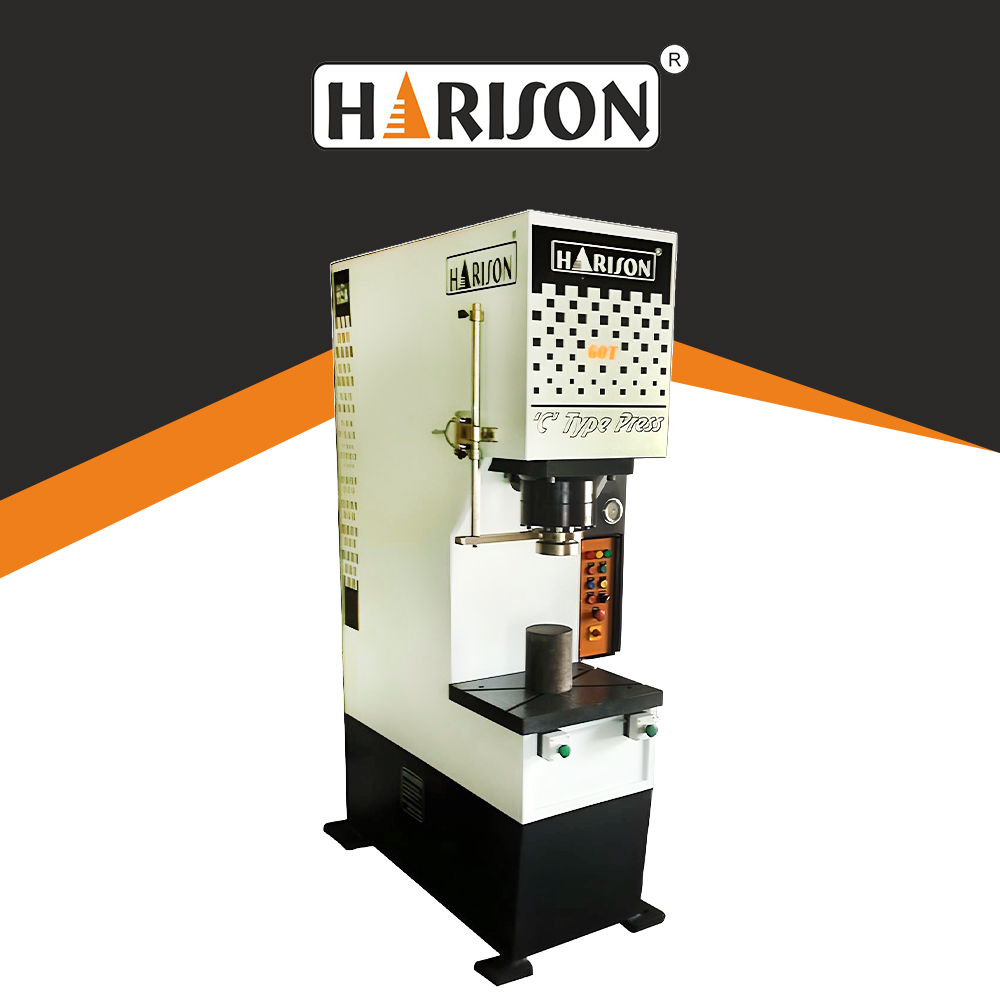
We have a well-equipped manufacturing plant where we manufacture a complete spectrum of hydraulic presses. Our product range includes H Frame, C type, Four Pillar Type Presses, Deep Drawing Presses, Hydraulic Power Packs, Four Column Type Fixed Frame Presses, and Four Column Type Workshop Presses.
Utilization Of Genuine Material
Sticking To Conveyance Plans
High Quality At Attractive Price
How does a hydraulic press work?
The working principle of a hydraulic press is based on Pascal’s Law, which states that pressure applied to a confined fluid is evenly transmitted throughout the fluid and the container's walls.
When force is applied to the smaller cylinder (the piston) by either manual or mechanical means, it creates pressure within the hydraulic fluid. This pressure is transmitted equally in all directions.
Due to the incompressible nature of the hydraulic fluid, the pressure is transmitted undiminished to the larger cylinder (the ram). This causes the ram to move in the same direction as the piston but with much greater force because of the larger surface area of the ram.
As the ram moves, it exerts a powerful force. This force can be utilized for various purposes such as compressing, bending, shaping, or molding materials placed within the press.
When force is applied to the smaller cylinder (the piston) by either manual or mechanical means, it creates pressure within the hydraulic fluid. This pressure is transmitted equally in all directions.
Due to the incompressible nature of the hydraulic fluid, the pressure is transmitted undiminished to the larger cylinder (the ram). This causes the ram to move in the same direction as the piston but with much greater force because of the larger surface area of the ram.
As the ram moves, it exerts a powerful force. This force can be utilized for various purposes such as compressing, bending, shaping, or molding materials placed within the press.
Technical Specifications
| TON | TABLE SIZE | RAM TO BED | STROKE | H.P. | ROD SIZE |
|---|---|---|---|---|---|
| 5 | 400*300 | 300 | 200 | 1.5 | 55 |
| 10 | 430*330 | 300 | 200 | 2 | 60 |
| 15 | 450*300 | 350 | 200 | 2 | 65 |
| 25 | 450*350 | 350 | 250 | 3 | 80 |
| 40 | 500*400 | 400 | 250 | 3 | 90 |
| 60 | 500*400 | 400 | 250 | 3 | 100 |
| 80 | 550*500 | 400 | 300 | 5 | 110 |
| 100 | 600*500 | 500 | 300 | 5 | 125 |
| 150 | 600*600 | 600 | 350 | 7.5 | 150 |
| 200 | 650*600 | 600 | 350 | 10 | 200 |
Your Trusted Source for Top Quality Hydraulic Press Machines
Hari Engineering Works is a leading brand that manufactures hydraulic presses in different capacities ranging from 5 tons to 150 tons to 500 tons. We have built these press machines with the latest technology and premium quality materials. Our range of press machines includes H-Frame Press, C-Type Press, Four Column Type Workshop Press, and Four Pillar Type Press Machine.
Each hydraulic press boasts a user-friendly control system, allowing for precise pressure regulation. We are one of the leading hydraulic press manufacturers in India, renowned for our product quality and durability. We use high-grade materials and precision engineering to create robust machines that can withstand even the most demanding workloads.
Each hydraulic press boasts a user-friendly control system, allowing for precise pressure regulation. We are one of the leading hydraulic press manufacturers in India, renowned for our product quality and durability. We use high-grade materials and precision engineering to create robust machines that can withstand even the most demanding workloads.
Various Applications & Features
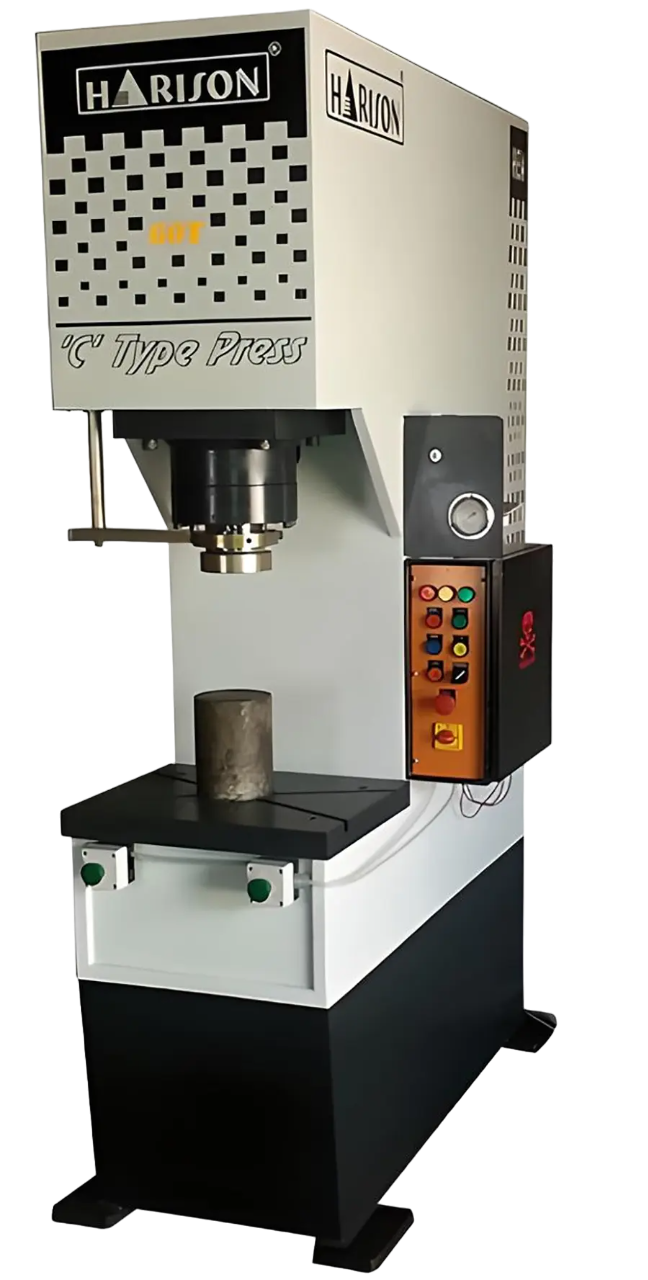
Advance Features
Pistons
Hydraulic cylinders
Oil tank
Hydraulic pumps
Control and relief valves
Pressure gauge
Pressing plate
Featured
Various Applications
Metal forming and shaping.
Manufacturing of components (e.g., car parts).
Compression molding in the plastics industry.
Straightening and bending of materials.
Powder compaction in pharmaceuticals.
Assembly of parts with tight tolerances.
Crushing and compacting recyclable materials.
FAQs
It’s actually a listed use case for these machines, so you’re not asking for something out of scope. What matters more is even, consistent pressure rather than just tonnage. Talk to Harison about your exact compaction pressure, and they’ll guide you from there.
It comes down to the hydraulic system doing its work properly, the pumps, valves, and gauges all working together to hold steady pressure cycle after cycle. A press in good condition shouldn’t lose pressure the way an old, worn mechanical press eventually does.
It matters more than people expect. Rod size affects how much sideways stress the ram can take during a press cycle. If your work involves off-centre force or an uneven die, it’s worth checking that number before you order.
Yes, that’s a listed use for these presses. The control system lets you fine-tune pressure precisely, which is really what gives you that tight tolerance, not the press type by itself.
Over time, especially with heavy use, hydraulic fluid will deteriorate and needs to be checked and replaced from time to time. A lot of pressure inconsistency that people blame on the machine is actually just old or contaminated fluid, easy to avoid with a basic maintenance routine.
It can happen on any press if maintenance gets skipped; it’s usually a wear issue, not a design flaw. Harison builds with good-quality materials to slow that down, but like any gauge, it’s still worth checking periodically.
It’s genuinely something they do; crushing and compacting is listed right alongside the more precise work. The tonnage you’d need is different from precision forming work, though, so just be clear about your material volume when you ask for a quote.
Car part manufacturing is a listed application here, and the machines are built with that kind of heavy, repeated use in mind, solid materials, careful engineering, built to hold up rather than wear out fast.
It depends on the type of work you’re doing with that. Hydraulic presses are smoother and give you more control, which is great for deep forming or compression work. Mechanical presses can run faster for quick, repetitive stamping. The decision is all on what you’re actually making.
Not really. Too much force on something delicate causes damage, not a better result. The right tonnage matches your material and part; going bigger than you need doesn’t make the output better, it just costs more.
Yes, we actually go up to 500 tons beyond what’s on the chart, and they build to your specific needs rather than just sticking to the catalogue sizes. Tell us your tonnage, table size, and stroke requirement.
Their whole pitch is good quality at a fair price, using accurate materials instead of charging extra for branding. The easiest way to know for sure is to get a quote for exactly what you need and compare it against other options yourself.
Just a general idea of what you are doing, what material you are working with and roughly how big the parts are. Call +91-982 548 7658 or email harisonmachine@gmail.com, and they’ll work out the details with you from there.
Yes, same number you used to order, +91-982 548 7658 or harisonmachine@gmail.com. Since they build the machines themselves, the person on the phone actually knows the press you bought, not just a generic script.